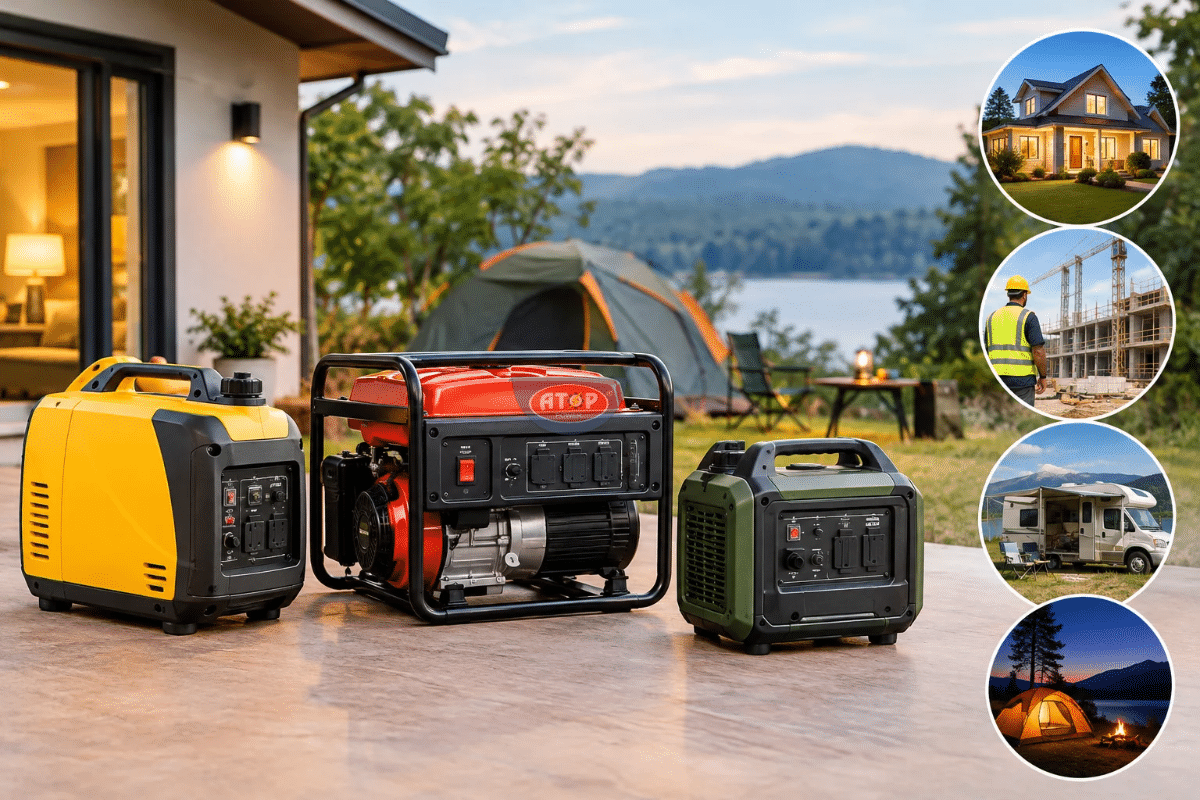
A portable generator gives you electricity where the grid cannot. You can carry it to a shop, a worksite, or a backyard and run lights, tools, pumps, and appliances. To pick the right one, you need three numbers: your total running load, the starting surge of your motors, and the hours you want it to run.
This guide covers what a portable generator does, where people use it, how to size one, and what affects the price. It also explains basic care.
What Is a Portable Generator?
A portable generator is an engine-driven machine that turns fuel into electricity and moves by hand or on wheels. People use it when mains power is missing, weak, or too far away.
Inside the frame you will find an engine, an alternator, a fuel tank, and a control panel. Some models have wheels and a lifting handle. Others sit on a plain steel frame.
A fixed standby set stays in one place and often starts by itself. A portable unit goes where the work goes, and you usually start it with a key or a pull cord.
Where Can You Use a Portable Generator?
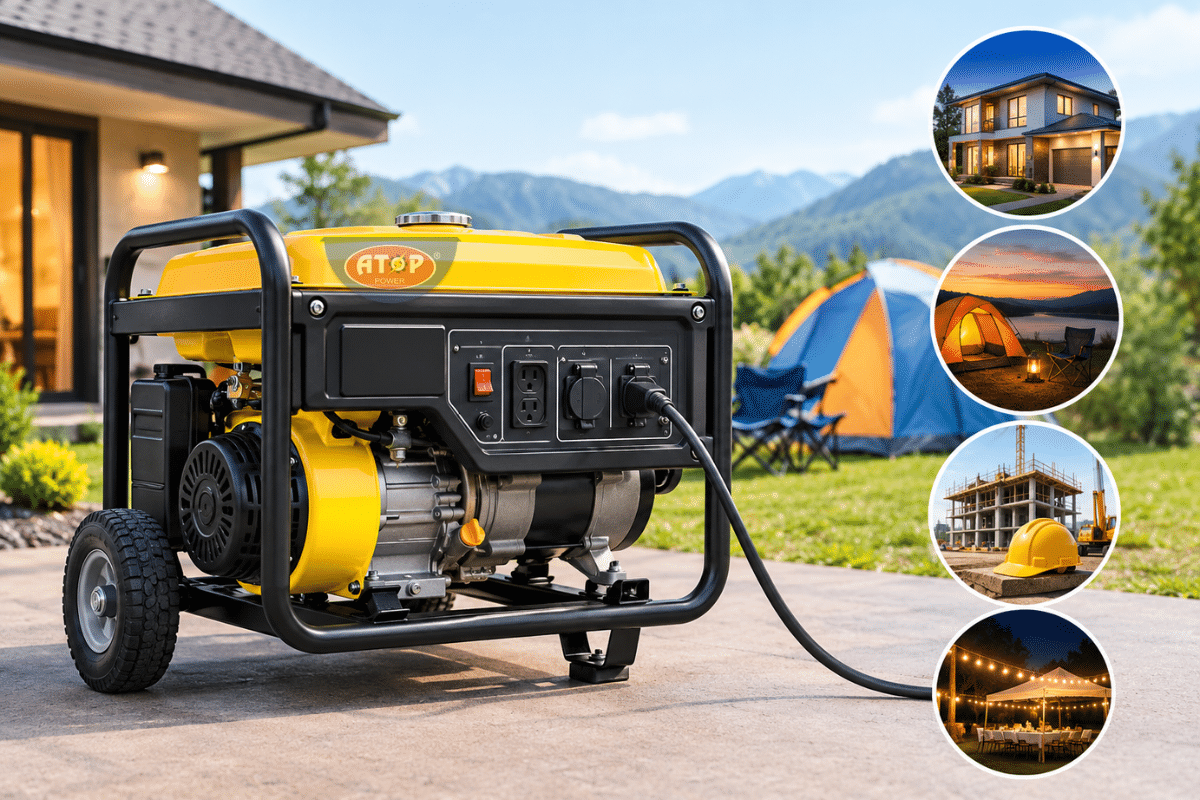
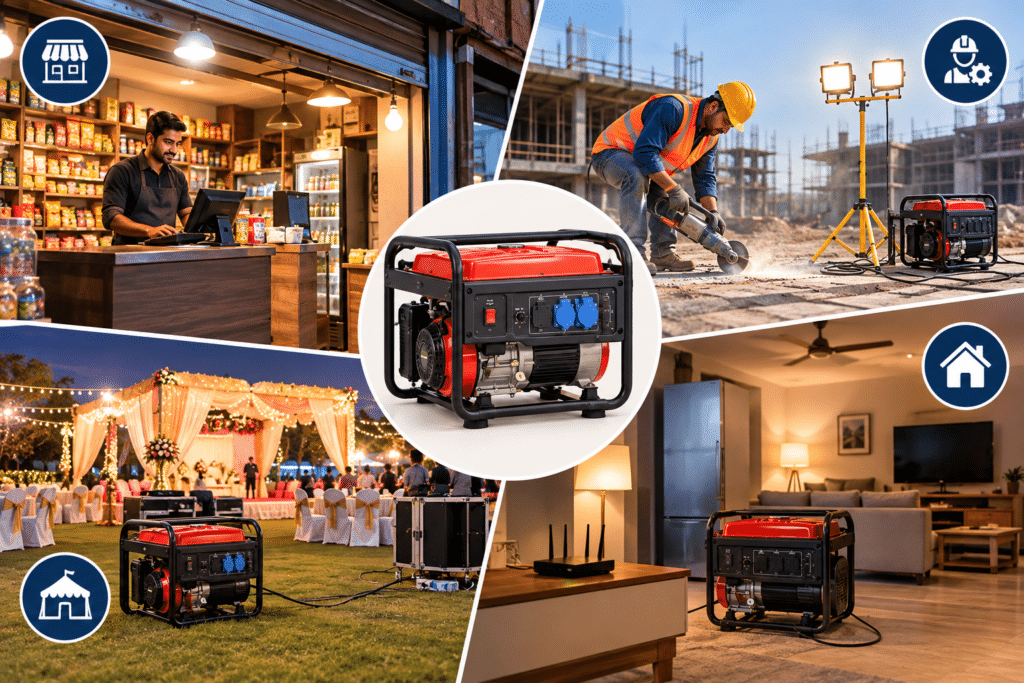
You can use a portable generator at commercial sites, outdoor work areas, temporary events, and homes. Match the model to the job before you buy.
- Commercial sites: A small shop can keep its billing counter and lights on during an outage.
- Outdoor work: Drills, grinders, and floodlights need power where no socket exists.
- Temporary power: Weddings, fairs, and market stalls need electricity for a day or two.
- Home backup: Lights, fans, a refrigerator, and a router are easy loads to cover.
No single model fits all four jobs. Ask the supplier to confirm that your chosen portable generator supports your use.
How Do You Choose the Right Portable Generator?
Add up what you will run together, allow for starting surges, and pick a portable generator rated above that total. Then check fuel, runtime, size, and service support.
Start with power output. List each device and its running watts, then add them up. Divide the total kW by 0.8 to get kVA.
Next, look at the starting load. Motors and compressors pull two to three times their running power for a few seconds. Refrigerators and water pumps cause most of the trouble here.
The table shows typical figures. Real values vary by make, so read each nameplate.
|
Equipment |
Running load | Starting load |
|
Five LED lights |
50 W | 50 W |
|
Ceiling fan |
75 W | 100 W |
| Refrigerator | 200 W |
600 W |
| 1 HP water pump | 750 W |
2,200 W |
| Angle grinder | 900 W |
1,200 W |
Here is a simple example. A small shop runs five LED lights, two fans, and a refrigerator. The running total is about 400 W. When the refrigerator starts, the peak reaches about 800 W.
A 1 kVA unit has no room to spare in that case. A 2 kVA portable generator gives a safe margin.
Fuel type is the next decision. Only the fuels a supplier lists for a model are real options for you.
|
Fuel |
Strength | Limit |
|
Petrol |
Light weight and lower purchase cost | Higher fuel cost over long hours |
| Diesel | Long runtime and strong motor starting |
Heavier and costlier to buy |
| Gas | Cleaner burning |
Needs a steady gas supply |
Also check the tank size and the hours a full tank lasts. Weight, wheels, and handles decide how easily you can move the unit. Plan a dry, open, ventilated spot before it arrives.
Two mistakes appear again and again. Some buyers size a portable generator by the largest appliance alone and forget the rest. Others ignore the starting surge, so the pump never starts. Both errors are easy to avoid with a written load list.
What Should You Check in Portable Generator Specifications and Models?
Check the rated output, fuel type, tank size, dimensions, weight, and features on each model’s datasheet. Ask for the datasheet before you decide.
Use this list when you compare units:
- Rated capacity in kW or kVA, and whether it is continuous or peak
- Engine make and cooling type
- Fuel type and tank capacity
- Dimensions and weight
- Features such as wheels, outlets, alarms, and electric start
- Noise level, given as a tested figure
Model-wise details live in the datasheet, so read it for every unit you consider. You can find the range on the Atop Generators portable generator page. Trust a claim about fuel use, noise, or warranty only when the datasheet states it.
What Affects Portable Generator Price?
Capacity, fuel type, engine quality, features, and service support decide the price of a portable generator. A higher rating and more features raise the cost.
Look beyond the purchase price. Fuel, service visits, and spare parts add up over the years.
A cheap unit that is too small will struggle under load and may need repairs sooner. So ask each supplier for a written quote that lists the model, the rating, and the warranty terms. Then compare like with like.
How Often Does a Portable Generator Need Maintenance?
A portable generator needs a quick check before each use and a full service at the interval in the maker’s manual. Running hours set the schedule.
- Before use: Check the oil, the fuel, and the air filter.
- After use: Let the engine cool, and store spare fuel in a closed container.
- Each season: Test the battery and run the unit for a few minutes.
- At service time: Change the oil and filters as the manual says.
- While idle: Start the unit briefly once a month to keep the fuel system clear.
Always run a portable generator outdoors or in a well-ventilated space. Its exhaust contains carbon monoxide, which is harmful to breathe.
What Are the Most Common Questions About a Portable Generator?
1. What is a portable generator used for?
It supplies temporary or backup power for tools, lights, appliances, and small commercial loads.
2. How do I choose the right generator capacity?
Add all running loads, allow for starting surges, and choose a rating above the total.
3. What factors affect portable generator prices?
Capacity, fuel type, engine, features, and service support all play a part.
4. How often does a portable generator need maintenance?
Check it before every use, and service it at the interval in the manual.
5. Can I connect a portable generator to my home?
Yes, through a changeover switch that a licensed electrician fits. Never plug it into a wall socket.
Contact us on Whatsapp today for more details and expert assistance!