The fluid you choose has a direct say in how well a mud pump runs, how long its parts survive, and how much pressure it can actually deliver. Get the viscosity wrong, and you’re putting stress on a pump it was never built to handle.
A mud pump is only as good as the fluid passing through it. Push thick, poorly mixed fluid through one, and it works overtime just to keep up. Run something too thin, and it can’t carry cuttings the way it’s supposed to. Most breakdowns trace back to this mismatch, not a faulty machine.
What Is Mud Pumping and Why Does Fluid Matter?
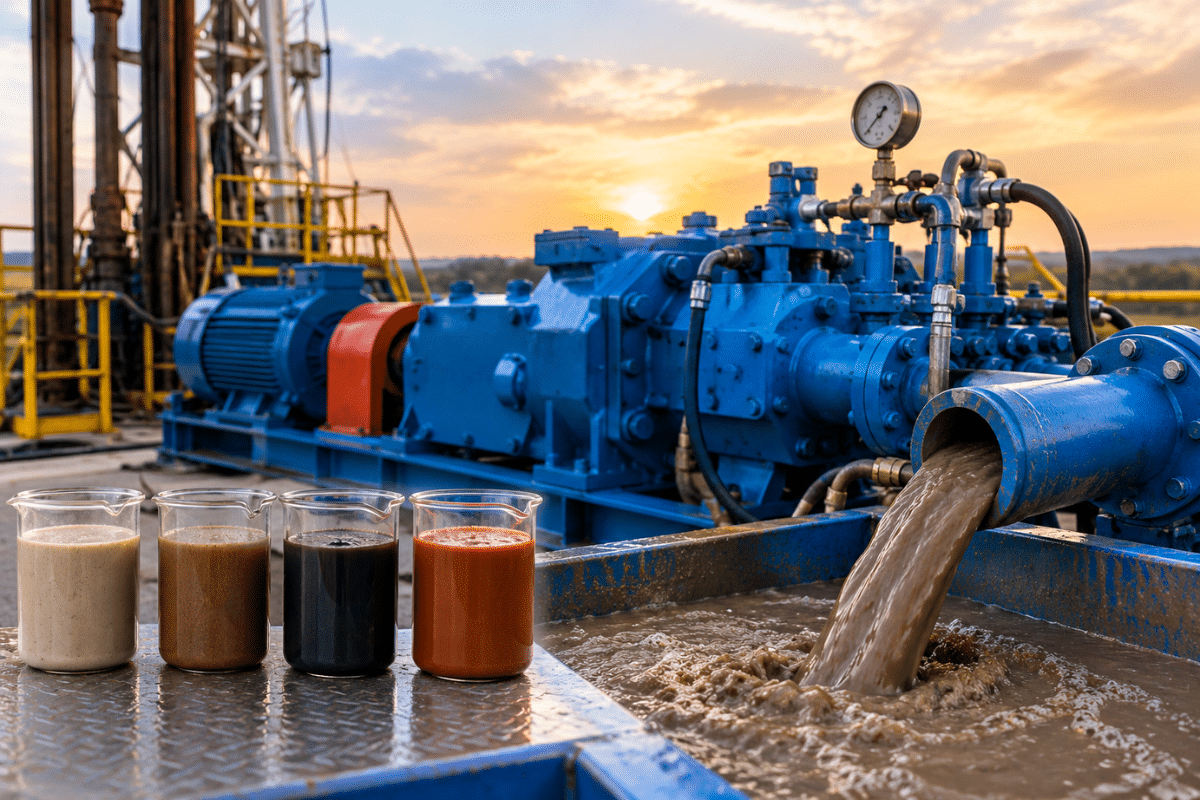
Mud pumping means circulating drilling fluid down a wellbore and back up through the same system. Along the way, that fluid carries rock cuttings to the surface, cools the drill bit, and keeps pressure inside the well from getting out of hand.
Push fluid that’s too thick, and a mud pump 1 HP or mud pump 3 HP unit ends up fighting resistance it wasn’t rated for. Seals and valves wear out faster when that happens — sometimes within months instead of years.
A few things fluid handles on every cycle:
- Carries cuttings away from the bit
- Cools moving parts under pressure
- Keeps the wellbore stable as drilling continues
How Do Drilling Mud Pumps Work With Different Fluids?
Drilling mud pumps draw fluid into a chamber, then force it out under pressure through pistons or plungers. Swap the fluid type, and the whole cycle behaves differently.
Water-based fluid moves through with far less resistance than oil-based or synthetic fluid, which run thicker and denser. Knowing how do drilling mud pumps work with each type is really what tells you which pump capacity to buy in the first place — not the other way around.
|
Fluid Type |
Viscosity |
Best Suited Pump |
|
Water-based |
Low | Mud pump 1 HP |
|
Oil-based |
Medium-High |
Mud pump 3 HP |
| Synthetic | High |
Higher HP mud pump |
What Happens When a Mud Pump Works Under Pressure Changes?
A mud pump work under pressure by adjusting its piston strokes to match whatever resistance the fluid is putting up. Thicker fluid needs slower strokes with more force behind them; thinner fluid lets the pump cycle faster without strain.
This is also where mud pump price starts to climb. A pump built to push heavier fluid needs tougher components throughout, and that difference shows up on the price tag pretty quickly.
What Determines Mud Pump Price for Different Fluid Loads?
Mud pump price comes down to three things: horsepower, build quality, and the fluid load it’s designed to move. A mud pump 1 HP price sits well below a mud pump 3 HP price simply because the output capacity isn’t comparable.
Buyers often line up mud pump 1 HP price against mud pump 3 HP price side by side, but capacity should really be decided by fluid type first. Buy cheap and undersized for a thick fluid job, and the repair bills later will cost more than the difference would have.
- Horsepower sets the base price
- Build material decides how long it lasts
- Fluid compatibility should come before price comparison
For anyone looking at reliable self-priming options, the mud pumpset range on Atop Generators is worth a look for capacity and pricing across different fluid loads.
What Is Mud Pumping in Rigid Pavement Construction?
In construction, mud pumping in rigid pavement describes soft, saturated soil or slurry getting pushed out from under concrete slabs after repeated traffic load. Water builds up under a pavement joint over time, and it eventually forces fine soil particles out with it.
That’s a completely different setting from drilling, but the underlying physics isn’t far off. Fluid under pressure behaves by the same rules whether it’s beneath a road slab or moving through a drilling rig.
How Does a Pulsation Dampener Work on a Mud Pump?
A pulsation dampener absorbs the pressure spikes that come with every piston stroke. Skip it, and fluid flow turns uneven, putting extra strain on pipes and fittings downstream.
Inside, the dampener holds a cushion of gas that compresses and expands as pressure shifts, smoothing everything out. That’s what keeps a mud pump running steady even when fluid density changes mid-operation.
How Should You Maintain a Mud Pump for Consistent Performance?
Testing fluid regularly and inspecting valves on schedule is what keeps a mud pump performing at its rated capacity. Skip these checks, and efficiency drops off sooner than most operators expect.
It also helps to flush the system whenever you switch fluid types. Leftover residue throws off viscosity readings and can quietly mess with pump calibration without anyone noticing right away.
Frequently Asked Questions
What is mud pumping?
It’s the process of circulating drilling fluid through a pump to carry cuttings and hold pressure steady.
How do mud pumps work?
They pull fluid into a chamber and push it out under pressure using pistons.
What is a fair mud pump price?
A mud pump 1 HP typically costs less than a mud pump 3 HP because of the output difference.
What is mud pumping in rigid pavement?
It’s the loss of soil and water from under a concrete slab caused by repeated traffic load.
How does a pulsation dampener help a mud pump?
It absorbs pressure spikes and keeps fluid flow smooth during operation.
Contact us on Whatsapp today for more details and expert assistance!