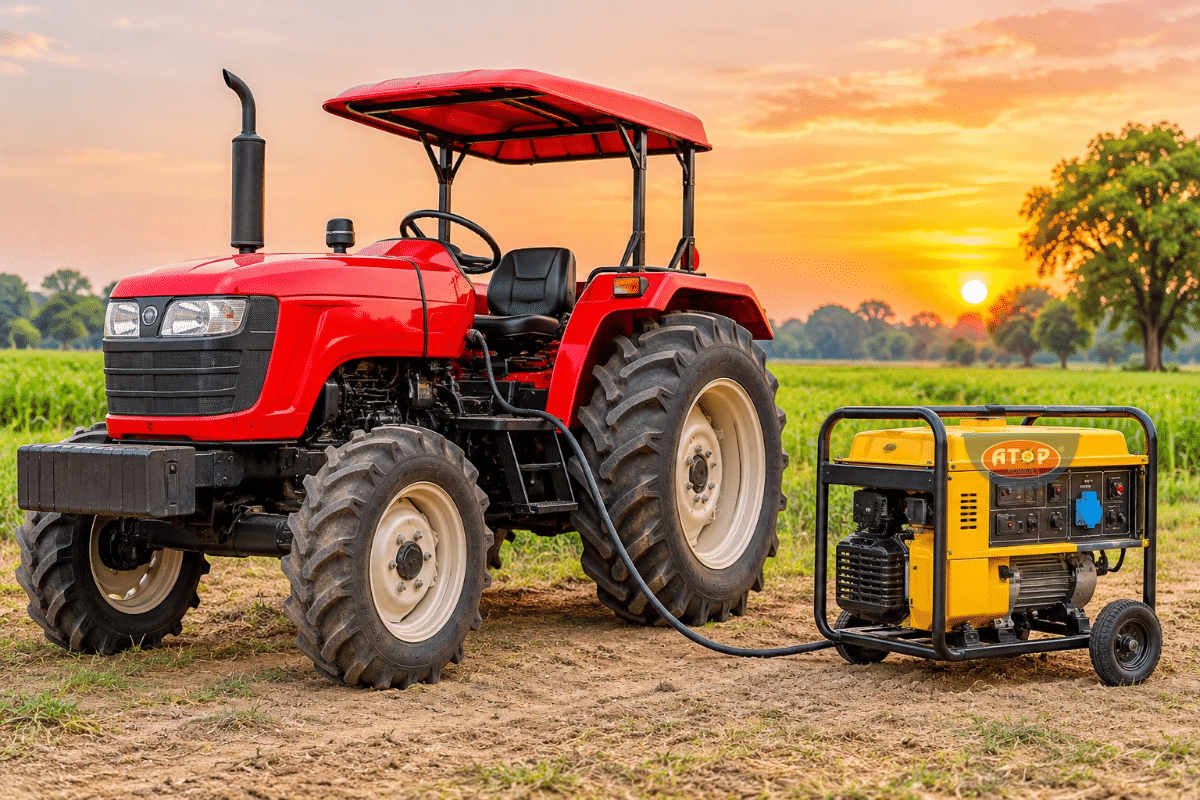
A tractor generator is an electric generator that runs on tractor power instead of its own engine. The tractor turns the generator through its power take-off (PTO) shaft, and the generator produces electricity. Farms, remote sites, and construction yards use a tractor generator when grid power is missing or unreliable.
This guide explains how a tractor PTO generator works, where it fits, and what shapes the tractor PTO generator price. It also shows how to match a tractor generator to your tractor, so you avoid costly mistakes.
What Is a Tractor Generator and What Does It Include?
A tractor generator is an alternator set that takes all its mechanical power from a tractor PTO shaft. It has no engine, fuel tank, or radiator of its own.
A standard unit includes these parts:
- Alternator that produces electricity
- Gearbox that raises the shaft speed
- Control panel with meters and breakers
- Drive shaft that connects to the tractor
- Frame or trailer for support and transport
Because the engine is missing, the tractor generator price is lower than that of a full diesel set. Many buyers also like that a tractor generator uses a machine they already own.
ATOP offers a tractor-driven generator set for this purpose. You can review the available details on the ATOP tractor-driven generator set page. Check them against your tractor before you order.
How Does a Tractor PTO Generator Work?
A tractor PTO generator works by sending the tractor’s rotating power through the PTO shaft to a gearbox, which spins the alternator fast enough to make electricity.
The process follows five steps:
- The tractor engine runs at a steady, set speed.
- The PTO shaft turns, usually at 540 rpm.
- The gearbox raises that speed to about 1,500 rpm for a four-pole, 50 Hz alternator.
- The alternator produces electric power.
- The voltage regulator and control panel deliver a stable output.
India uses 50 Hz, so speed control matters. If the tractor slows down under load, the frequency drops. Therefore, keep the engine at the rated PTO speed and watch the frequency meter.
The automatic voltage regulator keeps the output steady when the load changes.
Compatibility is the next point. A tractor generator needs the right PTO speed, shaft spline, and power rating. Many buyers assume any tractor will work. That assumption leads to weak output and stressed equipment. Always confirm these details with the manufacturer before you buy a tractor PTO generator.
Where Is a Tractor Generator Used?
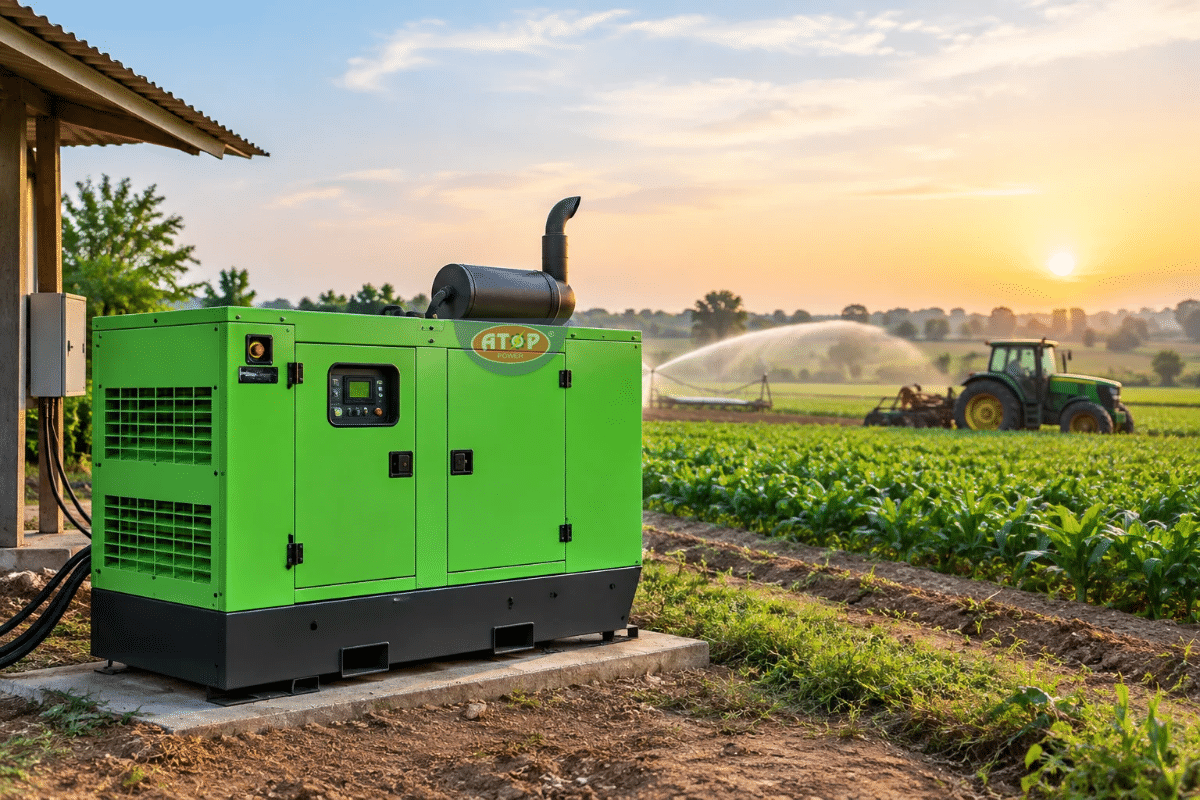
A tractor generator supplies temporary or backup power for farms, remote sites, and small workshops. It suits places where a tractor is already available.
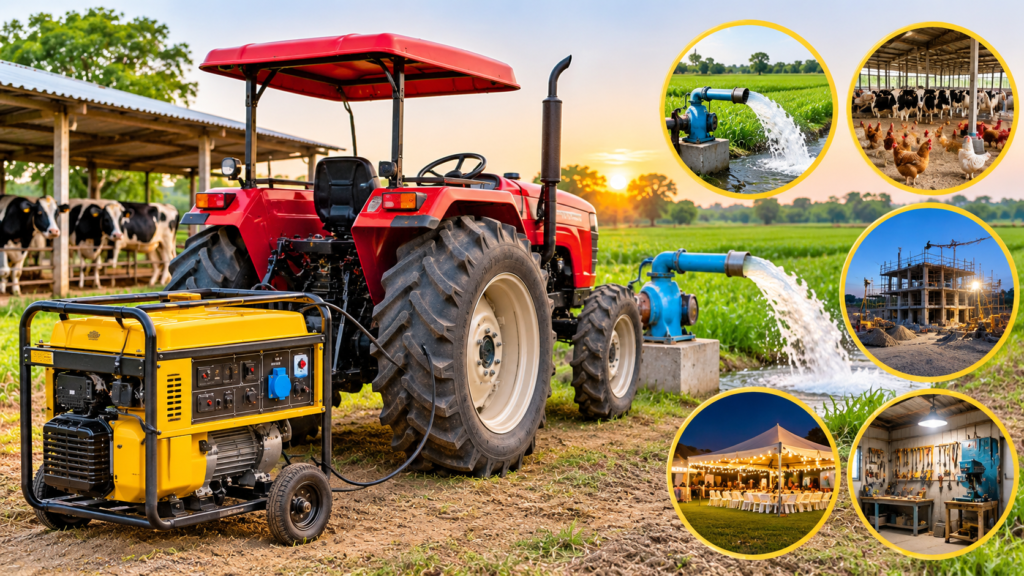
Common uses include:
- Running borewell and irrigation pumps
- Powering dairy and poultry sheds during outages
- Supplying lights and tools at construction sites
- Providing power at camps, fairs, and rural events
- Supporting small workshops and processing units
Farm owners gain the most. The tractor often sits idle between seasons, so a tractor generator puts it to work. Remote crews also like a tractor generator because they need no separate fuel engine.
Still, the match between load and unit size decides success. A pump motor needs far more power at startup than during running. Therefore, always size the generator for the startup surge.
Tractor PTO Generator Price: What Affects the Cost?
The tractor PTO generator price depends mainly on kVA capacity, alternator quality, gearbox design, controls, and service support. No single figure fits every buyer.
Key price factors include:
- Capacity. A larger kVA rating needs a bigger alternator and gearbox.
- Phase and voltage. Three-phase units cost more than single-phase units.
- Build quality. Better bearings, windings, and frames cost more.
- Accessories. Trailers, cables, and extra meters add to the bill.
- Service support. Spare parts and local service have value.
Buyers who search for tractor generator price often compare only the headline figure. That approach hides extra costs, such as transport, earthing, cables, and installation. Therefore, ask for a full quote.
Running cost also counts. A tractor generator burns the tractor’s diesel, so the load and run hours shape your fuel bill.
Also avoid the cheapest offer. An undersized alternator may overheat and fail early. A fair tractor PTO generator price reflects solid materials and tested output.
To get an accurate tractor generator price, share these details: your load in kW, tractor model, PTO speed, voltage, and phase. You can send the request through the ATOP product page, or contact ATOP Generators for specifications.
How Do You Choose the Right Tractor Generator?
Choose the right tractor generator by adding up your electrical load, then matching it to tractor PTO power, speed, and phase needs.
Follow this order:
- List your loads. Note the watts for every motor, light, and tool.
- Add startup surge. Motors may draw several times their running power at start.
- Convert to kVA. Divide the kW load by 0.8, a common power factor.
- Check tractor power. Keep PTO power 25 to 30 percent above the generator’s kW output, because the gearbox and alternator lose some energy.
- Confirm PTO speed and shaft type.
- Review safety features. Look for earthing, an overload breaker, a PTO shaft guard, and an emergency stop.
Here is a quick example. A 20 kVA tractor generator at 0.8 power factor gives 16 kW. Add 25 to 30 percent for losses, and you need about 20 to 21 kW at the PTO. That equals roughly 27 to 28 horsepower, so pick a tractor rated above that figure. Treat this as a rule of thumb, and confirm it with the maker.
Buyers often make these mistakes:
- Sizing the tractor generator by running load alone
- Ignoring PTO speed and spline type
- Skipping earthing and overload protection
- Running the tractor below rated speed to save fuel
Maintenance matters too. Grease the drive shaft, check gearbox oil, and inspect the connections each season.
How Does a Tractor Generator Compare with a Conventional Generator?
A tractor generator is more mobile and cheaper to own if you already have a tractor, while a conventional generator suits fixed backup power.
|
Factor |
Tractor generator | Conventional diesel generator |
|
Power source |
Tractor PTO shaft | Built-in engine |
|
Mobility |
Moves with the tractor | Needs a trailer or fixed base |
|
Upfront cost |
Lower, no engine included |
Higher |
| Fuel handling | Uses the tractor’s tank |
Uses its own tank |
| Automatic start | Not common |
Available with control panels |
| Best use | Farms and remote sites |
Homes, shops, and standby |
Choose a tractor generator when the tractor is free during outages. Choose a conventional set when you need power at any hour. A farm that needs the tractor in the field during an outage may need a second option.
Compare the tractor generator price with the cost of a diesel set of equal kVA. Also list how often outages occur and how long they last. This simple step shows which option saves more money.
To review a model, visit the ATOP tractor-driven generator set page and compare its specifications with your tractor details.
What Are the Most Common Questions About a Tractor Generator?
1. What is a tractor PTO generator?
It is a generator that gets its power from a tractor’s PTO shaft instead of an engine.
2. What affects tractor PTO generator price?
Capacity, phase, build quality, accessories, and service support set the price.
3. How do I select a tractor generator for my tractor?
Add up your load, convert it to kVA, and match it to your tractor’s PTO power and speed.
4. What tractor power is required for a tractor generator of a particular capacity?
Keep PTO power about 25 to 30 percent above the generator’s kW output.
5. Does the tractor generator price include a trailer?
It depends on the supplier, so confirm the trailer, cables, and panel in the quote.
Contact us on Whatsapp today for more details and expert assistance!