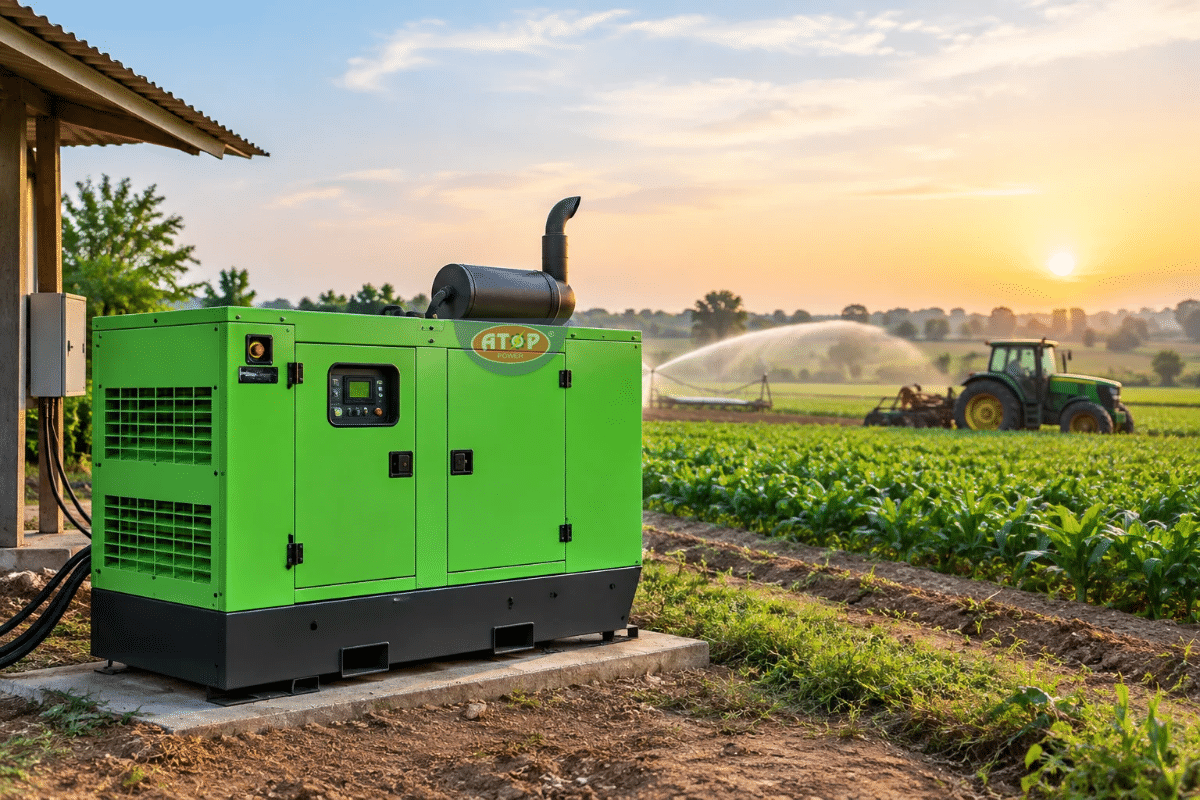
A diesel generator keeps a farm running when the grid does not. It can drive an irrigation pump, a thresher, a milking unit, or the lights in a cattle shed. Size is the key decision. Choose it by your total load and the starting current of your biggest motor, not by the pump rating on the nameplate.
This guide explains why farms pick a diesel generator, which types are available, and how to size one. It also covers a few buying mistakes that general pages rarely mention.
Why Do Farms Use a Diesel Generator?
Farms use a diesel generator because it delivers power on demand, whatever the grid is doing. A agriculture diesel engine generator also handles long running hours and heavy motor loads well.
Rural power lines are long and often weak. Voltage drops in the evening, and a single fault can cut supply for a full day. Crops cannot wait for the grid to recover.
A farm typically relies on a diesel power generator for:
- Irrigation pumps that run for many hours in dry spells
- Dairy chillers and milking machines
- Poultry fans and brooder heaters
- Grain dryers, threshers, and balers
- Cold rooms for fruit and vegetables
One missed irrigation cycle in a critical week can cut the yield. One warm milk tank can wipe out a day’s income. A generator protects against both.
Which Types of Diesel Generator Set Suit Agricultural Applications?
Farms mostly use small, mid-size, or large sets, and the right one depends on how many machines run together.
|
Type |
Best for | What to check |
|
Small diesel generator |
One pump, lights, a small workshop | Starting capacity for the pump motor |
| Mid-size diesel genset | Several pumps, dairy units, workshops |
Base size and fuel storage space |
| Large diesel generator set | Estates, cold storage, processing units |
Separate room and automatic changeover |
Ask each supplier which sizes it actually builds. A small diesel generator costs less to buy, but it may stall when a pump motor starts. Many first-time buyers find this out only after installation.
How Do You Choose the Right Diesel Generator for a Farm?
Add up every machine that may run together, convert the total to kVA, and then check the starting current of the largest motor. This order prevents most sizing errors.
Work through it like this:
- Write down every pump, motor, light, and cooler on the farm.
- Mark which ones can run at the same time.
- Add their kW ratings, then divide by 0.8 to get kVA.
- Add a margin of 20 to 25 percent for future machines.
- Note your expected running hours each day.
The table shows approximate running loads for common pump motors. It assumes 85 percent motor efficiency and a power factor of 0.8.
|
Pump motor |
Running load (kW) | Running load (kVA) |
|
5 HP |
4.4 | 5.5 |
| 10 HP | 8.8 |
11 |
| 15 HP | 13.2 |
16.5 |
The starting method changes the answer. A motor on a direct-on-line starter pulls a much larger surge than one on a star-delta or soft starter, so the generator must be bigger. A 10 HP pump on a direct-on-line starter, for example, needs a set well above its 11 kVA running load. Confirm the final figure with the supplier.
Buyers who search for a diesel generator for sale often compare only the price. Compare rated output and starting capacity too. A cheaper set that cannot start your pump is no saving.
What Should You Check on a Diesel Generator Specification Sheet?
Check the rated output, engine details, alternator type, fuel tank size, and warranty terms. Ask for all of them in writing before you buy a diesel engine generator.
- Rated output: kVA and kW, and whether the rating is prime or standby
- Engine: make, number of cylinders, and cooling type
- Alternator: type and insulation class
- Fuel tank: size, which decides the run time between refills
- Controls: protection alarms and an automatic changeover option
- Noise: a tested figure, not a general claim
- Service: warranty cover and the nearest service centre
Spare parts matter as much as the machine. Any generator India farmers buy should have local parts and trained technicians nearby. Verify every figure on power, fuel use, noise, and warranty against the datasheet of the exact model.
How Does a Diesel Generator Compare With Other Generator Types?
A diesel generator suits long hours and heavy motor loads better than most alternatives. Petrol, gas, and solar options fit lighter or fuel-free needs.
|
Option |
Strength | Limit |
|
Diesel generator |
Long running hours, strong motor starting | Needs fuel and regular service |
|
Petrol generator |
Low purchase cost for small loads |
Poor fit for long hours and heavy pumps |
|
Gas generator |
Cleaner burning |
Fuel supply is limited in many rural areas |
| Solar pump | No fuel cost |
Works only in daylight |
Some farms combine two options. A solar pump handles the sunny hours, and a diesel electric generator covers cloudy days and nights. That mix cuts diesel use without risking the crop.
How Do You Keep a Diesel Generator Reliable on a Farm?
Keep the air filter clean, use clean fuel, and service the diesel generator on schedule. Small habits prevent most breakdowns.
- Check air filters often during harvest, because farm dust clogs them fast.
- Store diesel in a closed tank to keep out water and dirt.
- Avoid very light loads. A diesel engine generator runs best at moderate load, and long idling causes carbon build-up.
- Fit a changeover switch so power never flows back into the grid.
- Earth the set properly and keep it in a dry, ventilated shade.
- Test the battery and run the diesel genset before peak irrigation season.
What Are the Most Common Questions About a Diesel Generator for Farms?
1. What size diesel generator do I need for a farm?
Add all running loads, convert them to kVA, and allow for motor starting current. Share your loads with the supplier for a final figure.
2. Is a small diesel generator enough for an irrigation pump?
It can be, if its starting capacity covers the pump motor. Check the starting method as well as the pump rating.
3. Can a diesel genset run all day?
Many models can, but check whether the rating is prime or standby.
4. How often should I service a diesel generator?
Follow the maker’s manual, because intervals depend on the engine and the running hours.
5. What should I check before I buy a diesel generator for sale?
Check the rated output, engine and alternator details, tank size, warranty, and service support.
Contact us on Whatsapp today for more details and expert assistance!