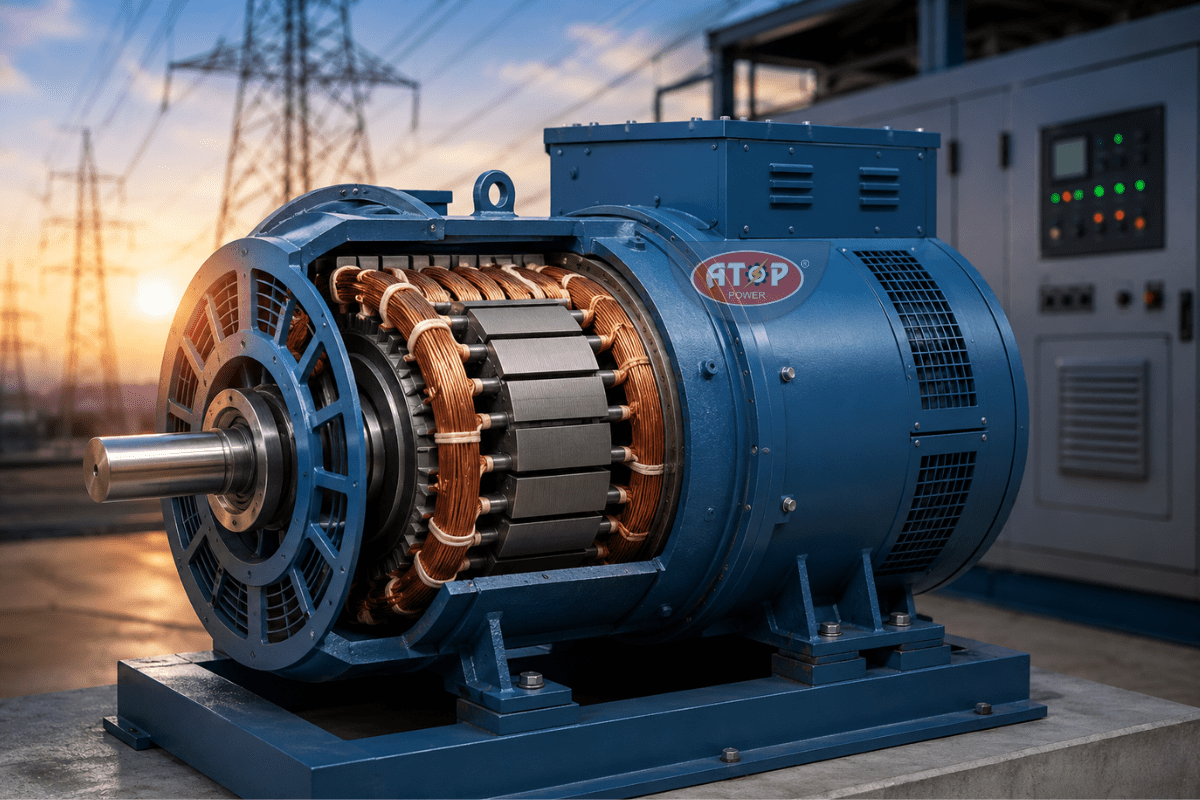
Three-phase alternators generate power through three separate voltage phases instead of one, and that single design choice is why industries, factories, and large commercial buildings depend on them. A single-phase machine pushes out power in pulses; a three-phase alternator does not, and its steady output is what heavy machinery needs.
Demand for three-phase alternators has grown steadily across Indian industrial hubs, including Jaipur, Ahmedabad, and Pune. This blog walks through how three-phase alternators work, where they get used, and what actually matters when comparing units before a purchase.
What Are Three-Phase Alternators?
A three-phase alternator is a rotating machine that produces three alternating currents, each one offset from the next by 120 degrees.
That 120-degree gap is really the whole trick. Instead of power dipping and spiking the way it does in a single-phase setup, the combined output stays smooth. Mechanically, a three-phase alternator is doing something fairly simple underneath – a magnet spins past a fixed set of coils, and that motion becomes electricity.
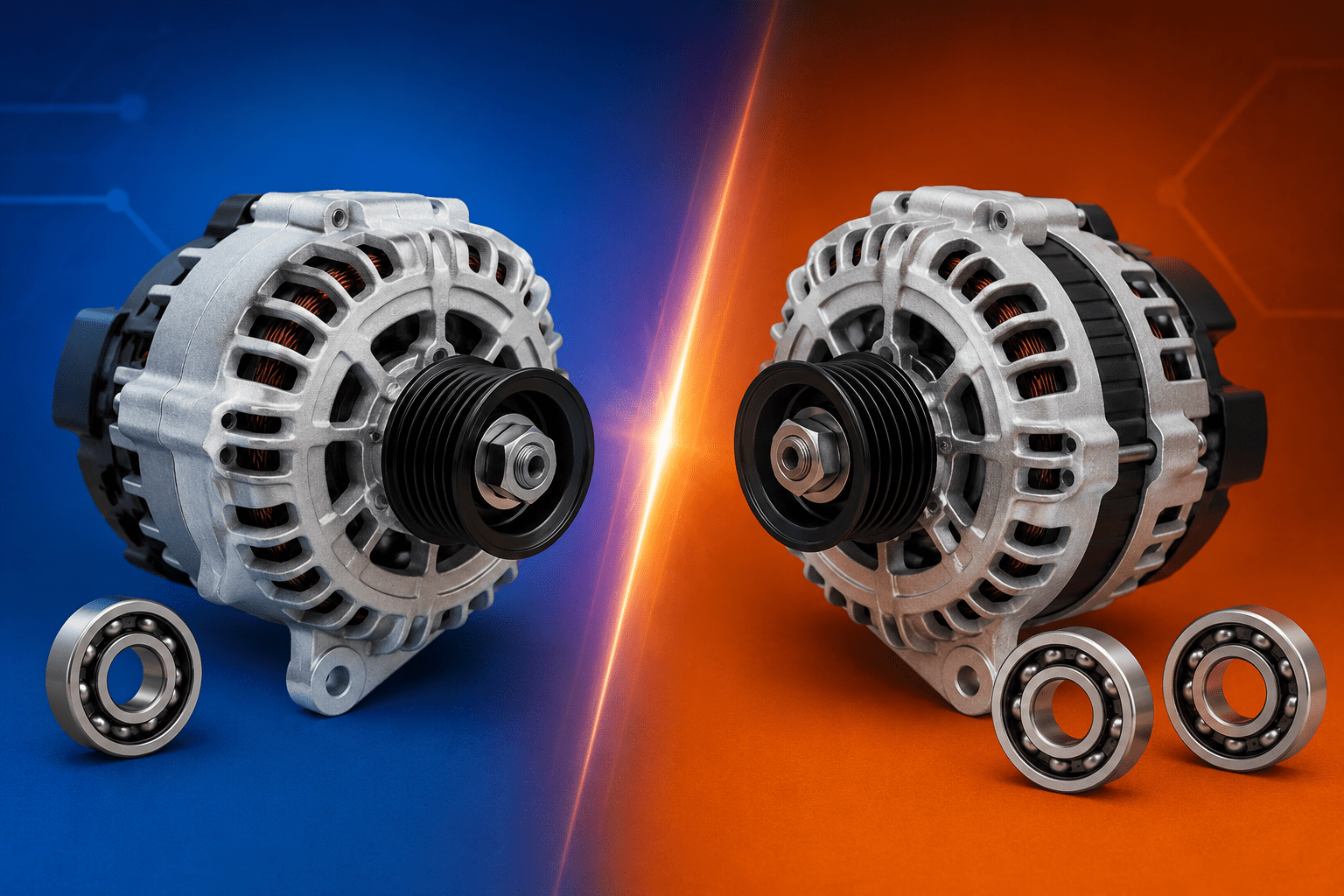
A handful of parts make it work: the rotor spins and builds the magnetic field, the stator holds the windings where electricity gets produced, an exciter feeds current to the rotor, and a voltage regulator keeps the output from drifting once real load hits the machine.
How Do Three-Phase Alternators Work?
In simple terms, a magnetic field rotates past three separate windings, and each winding produces its own voltage wave, offset from the others.
Line those three waves up and they combine into one continuous flow of power, instead of the stop-start rhythm you get from a single-phase machine. It’s also why three-phase alternators tend to run cooler under a sustained load – the current isn’t concentrated in one winding, it’s split three ways.
A three phase AC alternator relies on this same rotation to hold voltage steady across all three phases at once. Motors, transformers, and most industrial equipment are built around this kind of constant supply.
Why Are Three-Phase Alternators Better Than Single-Phase Systems?
For any load beyond a small workshop, three-phase alternators outperform single-phase systems on efficiency, wiring cost, and how much load they can actually carry.
| Feature | Single-Phase System | Three-Phase Alternators |
| Power Output | Fluctuating | Continuous |
| Efficiency | Lower | Higher |
| Wiring Cost | Higher for the same load | Lower for the same load |
| Typical Use | Homes, small shops | Factories, industrial plants |
| Motor Starting | Needs extra starting components | Self-starting |
There is a practical side too: a three phase AC alternator uses less copper for the same output, so it costs less to install and maintain over its lifetime.
Where Do Three-Phase Alternators Get Used?
Three-phase alternators show up wherever machinery cannot afford to stop: manufacturing floors, hospitals, data centers, and large commercial complexes.
A plant running CNC machines or conveyor lines cannot tolerate voltage dips, so three-phase alternators are the default there. Hospitals use them for the same reason, except the stakes are higher, since diagnostic equipment needs power that does not waver.
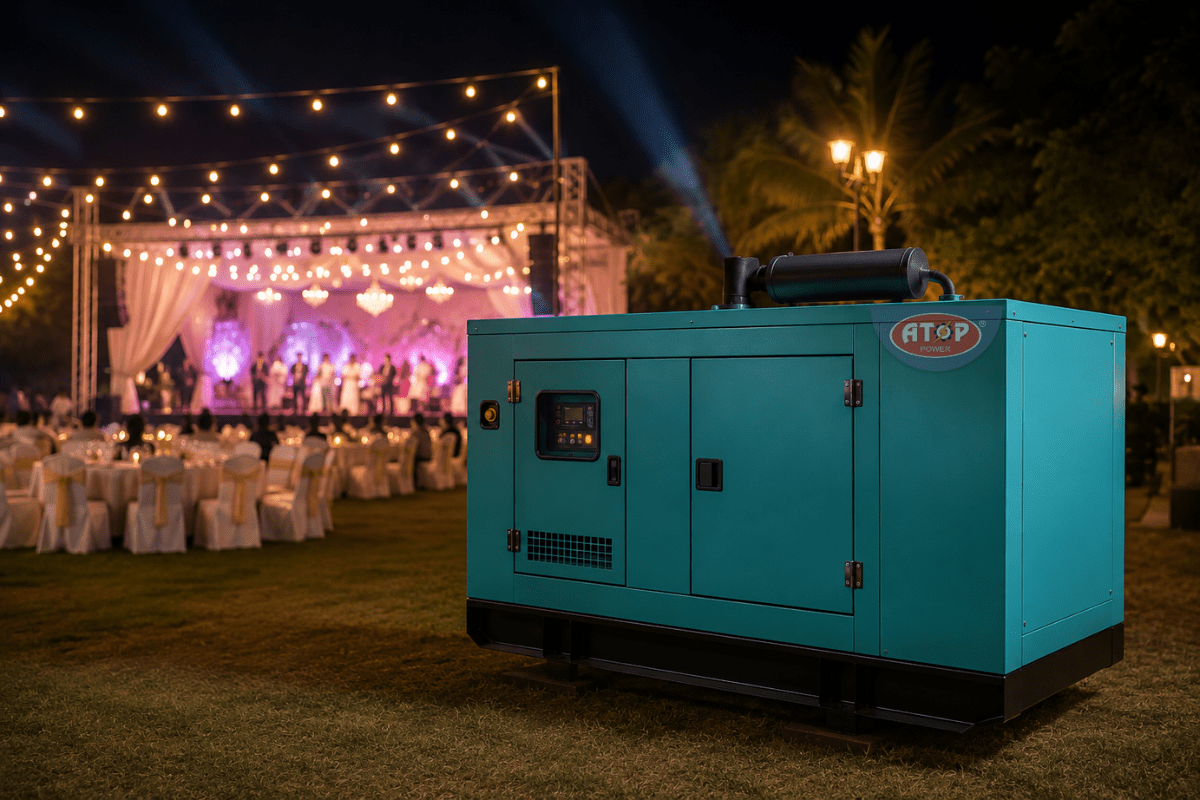
Construction sites, malls, and IT server rooms round out the list. A three phase AC alternator also works well as a backup unit, which matters most in cities like Jaipur and Chennai, where grid outages can still interrupt production without warning.
What Should You Check Before Buying One?
Before buying three-phase alternators, look past the price tag and check the kVA rating, voltage regulation range, insulation class, and what the warranty actually covers.
Matching the kVA rating to the real load is the step buyers skip most often, and it causes the most problems later. Insulation class matters too, since it decides how much heat the windings can take before performance drops.
Fuel consumption and noise levels are worth comparing as well. A well-built three phase AC alternator tends to run quieter and burn less fuel over long shifts, and that difference adds up fast.
Which Company Makes Reliable Three-Phase Alternators?
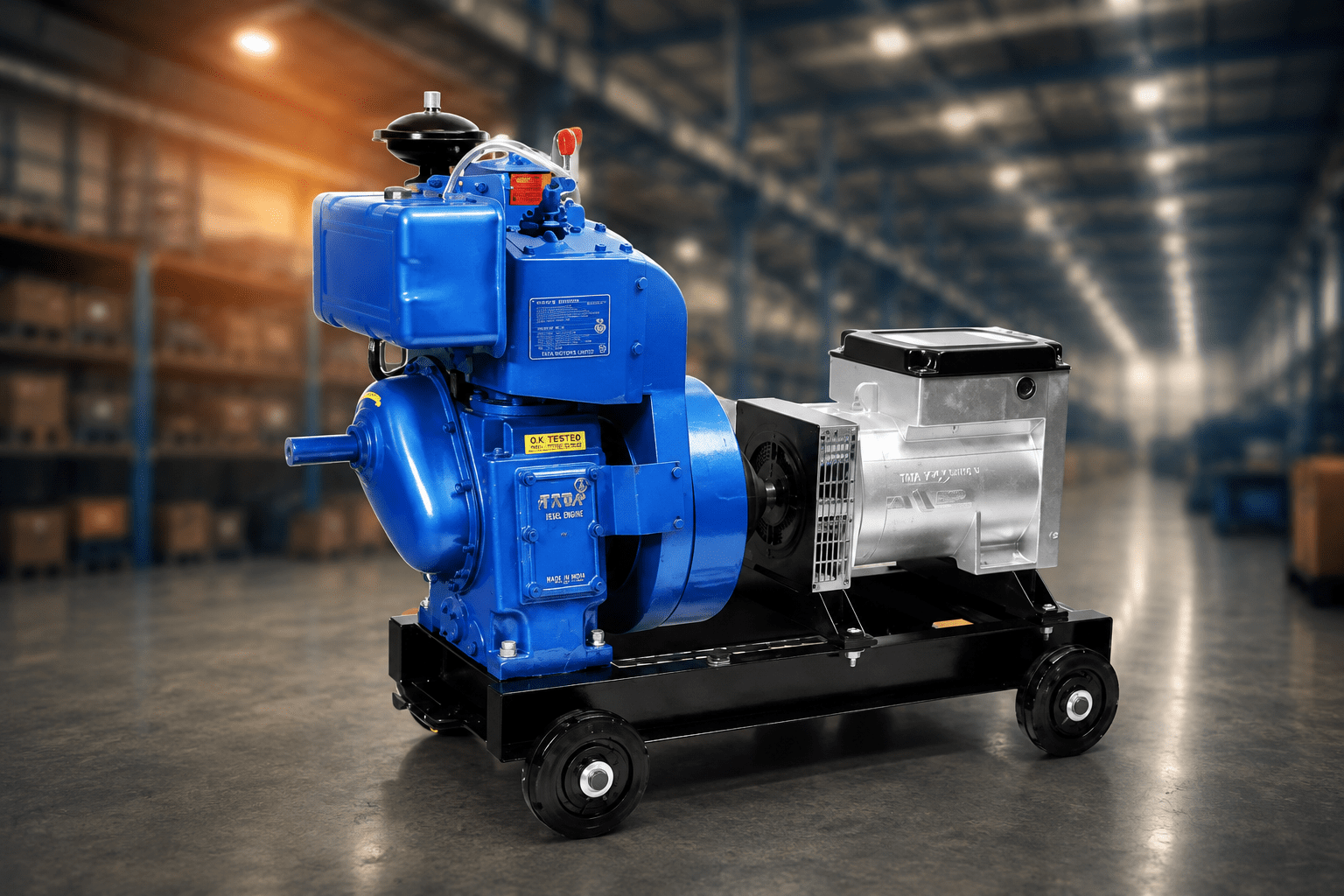
EvoTech Power builds three-phase alternators for buyers who need consistent output and low maintenance over years of industrial use.
The company tests every unit for voltage regulation before it ships and sticks to materials built for sustained heat and load. That is part of why EvoTech Power keeps coming up when businesses ask around for three-phase alternators that will not need constant servicing.
If you want to compare specifications before deciding, Atop Generators also has a detailed three phase AC alternator.
Checking two or three manufacturers side by side is usually enough to spot which three-phase alternators actually fit the load profile.
What Do People Usually Ask About Three-Phase Alternators?
What is the main advantage of three-phase alternators over single-phase units?
Three-phase alternators deliver continuous power and carry heavier loads using less wiring.
Can a three phase AC alternator work for a home setup?
It can, but single-phase systems are usually simpler and cheaper for small residential loads.
How long do three-phase alternators usually last?
With regular maintenance, most units run reliably for fifteen to twenty-five years.
Do three-phase alternators need a special installation process?
Yes. The higher voltage means installation should be handled by a trained technician.
Where should a business buy a dependable three-phase alternator?
Established manufacturers like EvoTech Power, or verified suppliers such as Atop Generators, are the safer starting point.