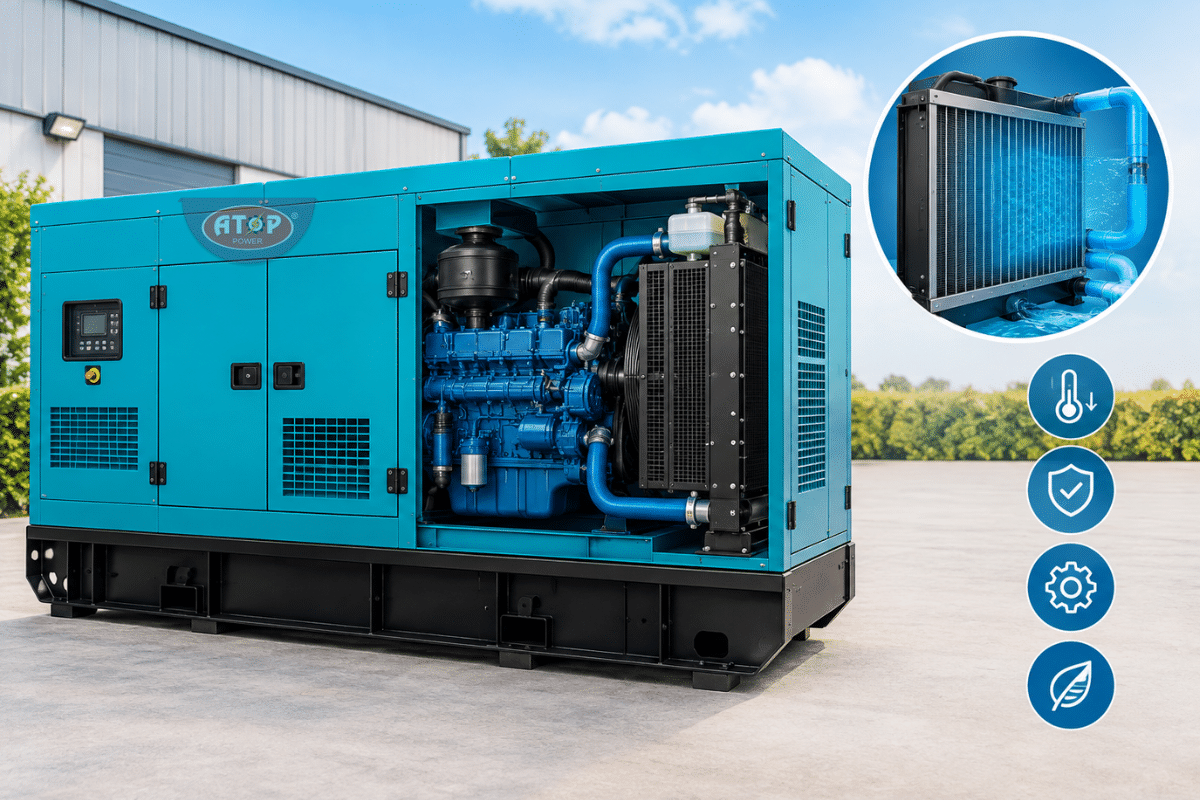
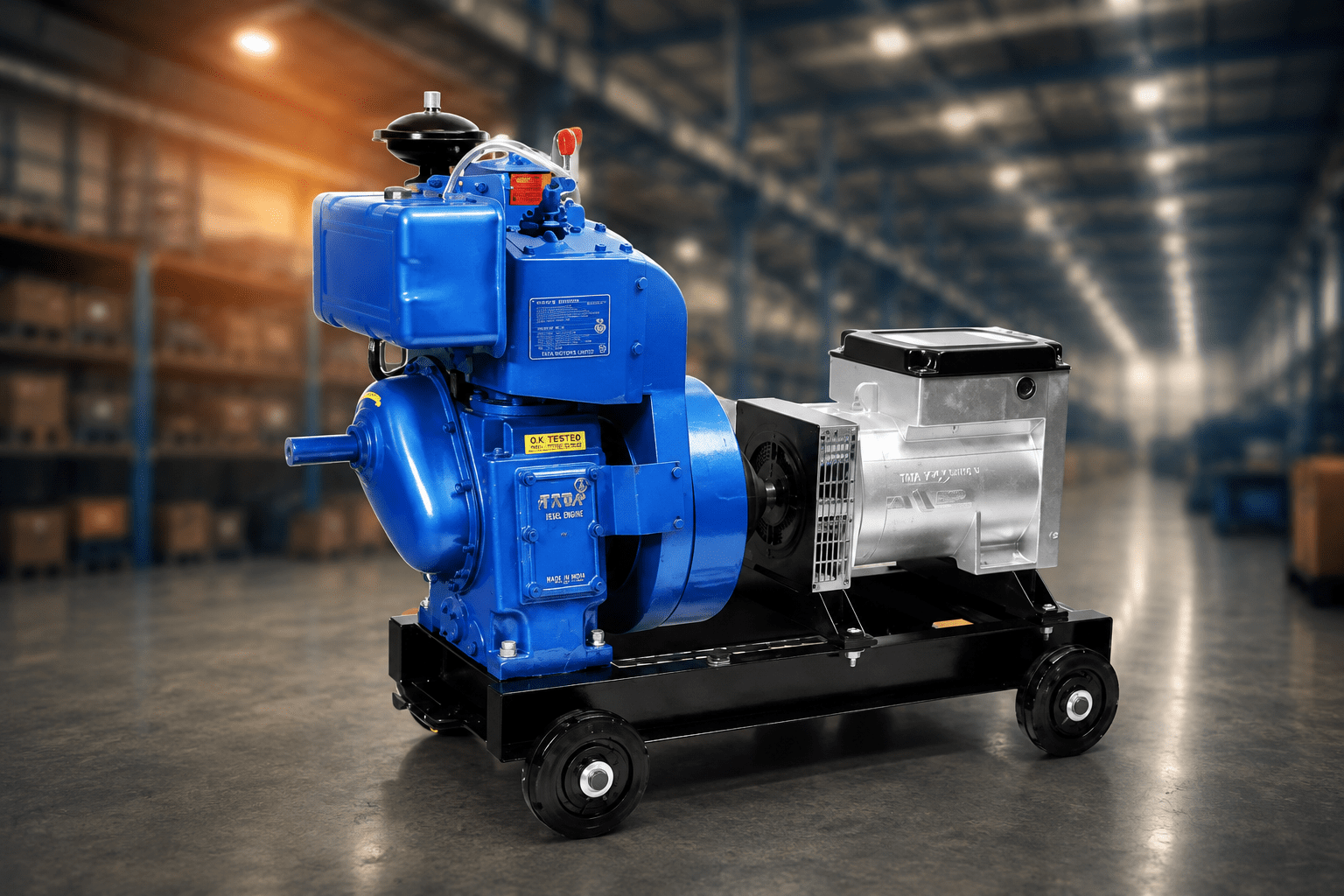
Air does the job that water does in other engines. A fan pushes air across the finned cylinder walls of a Diesel Generator Set, heat transfers into that moving air, and it escapes through a vent before the engine gets close to a dangerous temperature. No coolant, no radiator, no pump. Just moving air and smart use of metal surface area.
What Does Air Cooling Actually Do Inside a Diesel Generator Set?
It pulls heat straight off the engine surface using airflow instead of a liquid coolant loop. Engineers achieve this by casting fins into the cylinder block of a Diesel Generator Set, which multiplies the surface area exposed to air and speeds up how fast heat leaves the metal.
A fan draws air continuously over the block. The fins spread that heat across a wider area than a smooth surface ever could. Hot air then gets forced out through vents or ducting, and the cycle repeats for as long as the engine keeps working.
Why Do Some Manufacturers Prefer Air Cooling Over Water Cooling?
Fewer parts, fewer failure points. An air-cooled Diesel Generator Set skips the radiator entirely, along with the coolant lines and the risk of a leak. Nothing here freezes in winter or boils over in summer the way a coolant system sometimes does.
Water cooling manages heat with more precision and handles bigger loads better, but it brings more components that need regular attention. For a smaller or mid-range diesel generator set, air cooling usually wins because there’s less that can go wrong.
How Does an Air-Cooled Diesel Generator Set Compare With a Water-Cooled One?
The gap between the two shows up once you line up weight, upkeep, and where each one performs best.
| Parameter | Air-Cooled Diesel Generator Set | Water-Cooled Diesel Generator Set |
| Cooling Method | Airflow over fins | Circulating coolant |
| Maintenance Needs | Lower | Higher |
| Suitable Power Range | Small to mid-size | Mid-size to large |
| Weight | Lighter | Heavier |
| Risk of Coolant Leaks | None | Present |
| Noise Level | Slightly higher | Usually lower |
Air cooling wins on simplicity almost every time. Water cooling pulls ahead once continuous heavy loads enter the picture, which is why larger installations still lean toward it.
Which Parts Actually Make Air Cooling Work in a Diesel Generator Set?
A handful of components carry this system, and none work well alone. The fan, mounted on the flywheel or driven by a belt, keeps air moving across the block at a steady pace. Finned cylinder walls do the heavy lifting by maximising contact between metal and moving air. Ducting or shrouding directs that airflow where it’s needed instead of letting it scatter, and some models add an oil cooler for extra heat management during long runs.
Pull out any single piece of that setup, and heat piles up faster than the engine can safely shed it.
How Does Airflow Actually Bring the Temperature Under Control?
By constantly swapping hot air near the engine for cooler air pulled from outside. As the fan spins, air moves across the finned surfaces and heat jumps from metal into air almost instantly. That transfer never stops while the engine runs.
- Steady airflow keeps heat from pooling in one spot
- Fins widen the surface area exposed to moving air
- Shrouding focuses airflow where cooling matters most
- Even fan speed keeps cooling consistent across long hours
This is the whole reason a Diesel Generator Set can run for hours without the engine drifting into unsafe territory.
What Happens If the Cooling System in a Diesel Generator Set Fails?
Temperatures climb fast, and internal damage can follow within minutes. A blocked fan, dirty fins, or restricted ducting cuts cooling efficiency almost immediately, and the engine has no backup once that airflow stops doing its job.
- Internal temperatures rise past the safe range
- Pistons, bearings, and seals take on extra wear
- Automatic shutdown may kick in to limit damage
- Repair costs rise quickly once the problem goes unnoticed
Checking fins, fans, and ducting regularly keeps this risk low and keeps a Diesel Generator Set running well, season after season.
Where Can Buyers Find a Reliable Diesel Generator Set With Proper Cooling?
Look for a manufacturer that tests cooling performance under real working loads, not just numbers on a spec sheet. A poorly engineered cooling system can undercut even a solid engine over time, no matter how good the rest of the build looks.
Buyers comparing options for a dependable Diesel Generator Set can look through available models at atopgenerators.com/products/industrial-generator.
Getting the cooling system right from the start avoids overheating problems later and keeps the generator running at full capacity for years.
For reliable power solutions, explore our Air-Cooled Generator Sets designed for efficient and dependable performance.
Frequently Asked Questions
Is air cooling suitable for a large Diesel Generator Set?
It suits small to mid-size units best, while larger sets usually depend on water cooling instead.
Does an air-cooled Diesel Generator Set need less maintenance?
Yes, fewer parts like radiators and coolant lines mean simpler and less frequent maintenance work.
Can an air-cooled system overheat in high-temperature climates?
Yes, extreme heat can reduce cooling efficiency, so proper ventilation and airflow design matter a lot.
How often should cooling fins be inspected on a diesel generator?
Checking every few months usually catches dust buildup or damage before it hurts performance.
Is air cooling noisier than water cooling in a generator set?
It can run slightly louder, since the fan works continuously to keep airflow moving.